Montmartre Paris: The Complete Guide to the Village Above the City
Discover Montmartre beyond the tourist trail — from the Sacré-Cœur basilica and Place du Tertre to the hidden vineyard, the last windmills, and the café where Picasso drank. Your complete insider guide to Paris's most romantic hilltop village.
ElysiaGo Local Guides
Why Montmartre Is Unlike Any Other Paris Neighbourhood
Perched on the highest hill in Paris at 130 metres, Montmartre has always existed slightly apart from the rest of the city. For centuries it remained an independent village outside city limits, attracting windmills, vineyards, cabarets, and — in the late 19th century — the greatest concentration of artistic talent the world has ever seen.
Picasso, Van Gogh, Toulouse-Lautrec, Renoir, Degas, Modigliani, Utrillo: they all lived, worked, and drank here. Today, Montmartre remains one of Paris's most atmospheric neighbourhoods — and one of its most visited. This guide tells you how to experience it like a local, not a tourist.
Getting to Montmartre
Montmartre sits in the 18th arrondissement of Paris, in the north of the city.
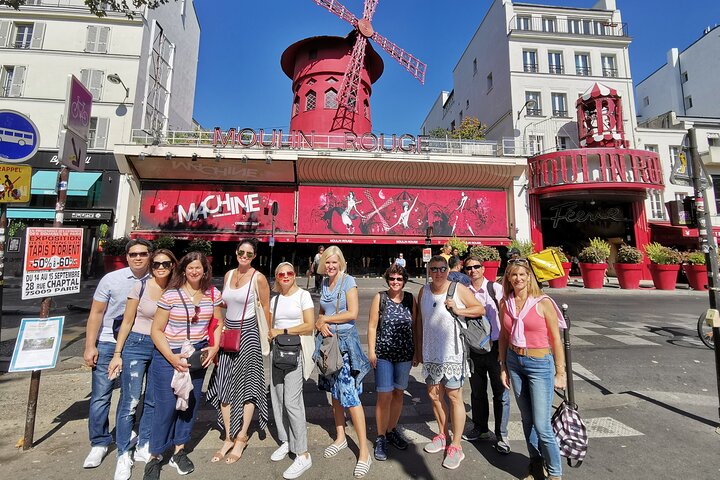
- By metro: Line 12 to Abbesses (the deepest station in Paris, with a beautiful Art Nouveau entrance) or Line 2 to Blanche (directly below the Moulin Rouge) or Pigalle.
- By the funicular: From the bottom of the hill (Anvers metro stop), take the Montmartre funicular — included in any Paris metro ticket — for a scenic 90-second ride straight up to the Sacré-Cœur esplanade.
- On foot: The classic approach is up the long staircase from Place Saint-Pierre, with the Sacré-Cœur growing larger with each step.
Sacré-Cœur Basilica: What You Need to Know
The white Romano-Byzantine basilica that crowns the Butte Montmartre is one of Paris's most recognisable landmarks — and entry is completely free. Construction began in 1875 and was only completed in 1914; the building was consecrated after World War I in 1919.
Tips for Visiting Sacré-Cœur
- Arrive early morning (before 9:30 AM) or at sunset for the most peaceful experience and the best views over Paris.
- Climb the dome for a 360° panorama that reaches up to 50 km on a clear day. It costs €8 and involves 300 steps — but the view is among the best in Paris.
- Be cautious on the steps. The esplanade in front of the basilica is a well-known spot for bracelet scammers — politely but firmly decline any approach.
- The interior is always open for prayer and visits. Photography is permitted inside.
Beyond Sacré-Cœur: Montmartre's Hidden Treasures
Most visitors see Sacré-Cœur and Place du Tertre — the crowded square filled with portrait artists — and leave thinking they've seen Montmartre. They haven't. The real village begins just a few steps away from the tourist flow.
The Montmartre Vineyard
Tucked behind a stone wall on Rue des Saules, the Clos Montmartre is one of only a handful of working vineyards within Paris city limits. Planted in 1933 to preserve the neighbourhood's rural heritage, it produces around 1,500 bottles of wine per year — auctioned off each October during the famous Fête des Vendanges de Montmartre. The vineyard is visible from the street year-round and is one of Paris's most surprising sights.
The Last Windmills of Paris
At the peak of the 18th century, Montmartre had over 30 windmills grinding grain and pressing grapes. Two survive today: the Moulin Radet and the Moulin de la Galette, on the corner of Rue Lepic and Rue Girardon. The Moulin de la Galette was immortalised by Renoir in his 1876 masterpiece Bal du Moulin de la Galette, now in the Musée d'Orsay.
The Artistic Streets
- Rue Lepic — The main market street of Montmartre. Van Gogh lived at number 54 with his brother Theo. Stop for coffee at Les Deux Moulins, the café from the film Amélie.
- Place du Calvaire — A tiny square just behind the Place du Tertre with one of the best free panoramic views in Paris, known only to locals.
- Allée des Brouillards — A mysterious, winding path behind a private garden where Renoir once lived.
- Le Bateau-Lavoir — On Place Émile Goudeau, this is where Picasso painted Les Demoiselles d'Avignon in 1907, revolutionising art history. The original building burned down in 1970; the current structure is a reconstruction.
Montmartre Cemetery
Far less visited than Père Lachaise but equally fascinating, Cimetière de Montmartre is the final resting place of Émile Zola, Edgar Degas, François Truffaut, and Jacques Offenbach (composer of the can-can). Entry is free and the atmosphere is peaceful and extraordinarily photogenic.
Where to Eat and Drink in Montmartre
- La Maison Rose — The pink house at the corner of Rue de l'Abreuvoir is one of the most photographed spots in Paris. Stop for a coffee and soak up the village atmosphere.
- Le Relais de la Butte — A neighbourhood bistro on Rue Ravignan, far from the tourist crowds. Classic French cuisine at honest prices.
- Arnaud Larher — One of Paris's top chocolatiers and pâtisseries, on Rue Caulaincourt. The seasonal tarts are unmissable.
- Cave des Abbesses — A neighbourhood wine bar where you can taste and buy natural wines, some produced just metres away in the Clos Montmartre.
Discover Montmartre With a Local Guide
The stories that make Montmartre extraordinary — the scandals, the artistic rivalries, the hidden courtyards where history was made — are invisible without someone who knows where to look. ElysiaGo's Montmartre Walking Tour is led by certified local guides in groups of maximum 6 people, and takes you deep into the neighbourhood's artistic and bohemian soul: the streets where Picasso and Van Gogh walked, the guinguettes where Toulouse-Lautrec sketched, and the quiet corners that have changed almost nothing in 150 years.
Best Time to Visit Montmartre
- Early morning (8–10 AM): The streets are quiet, the light is extraordinary, and the cafés are just opening. The best time for photography.
- Weekday afternoons: Calmer than weekends. Most tour groups concentrate around Sacré-Cœur; the side streets are always peaceful.
- October (Fête des Vendanges): The annual wine harvest festival fills the streets with music, food, and the entire neighbourhood in festive mood.
- Avoid: Saturday afternoon in summer, when the main tourist route from Abbesses to Sacré-Cœur is extremely congested.
Frequently Asked Questions
How long does it take to walk around Montmartre?
Is Montmartre safe to visit?
What is Montmartre famous for?
Is entry to Sacré-Cœur free?
How do I get to Montmartre from central Paris?

About ElysiaGo Local Guides
We are a team of certified, passionate Parisian locals dedicated to showing you our city beyond the mass tourism trails. Every guide brings their unique knowledge of history, art, and local secrets to craft unforgettable experiences.