Paris Guides
Musée d'Orsay Guide: 10 Masterpieces and Tips for Your Visit
The Impressionist masterpieces you should not miss at the Musée d'Orsay, the story of the old railway station, the best time to go and how to plan your visit.
In this article
Housed in a grand railway station on the banks of the Seine, the Musée d'Orsay holds the world's finest collection of Impressionist and Post-Impressionist art. Monet, Renoir, Degas, Van Gogh and Cézanne hang a few rooms apart, in a building that is a masterpiece in its own right. This guide tells you what to see first, how the museum is organised and how to plan a visit without the crowds.
From railway station to museum
The Gare d'Orsay was built by the architect Victor Laloux for the 1900 World's Fair, as the elegant terminus of the Paris-Orléans railway. Its platforms soon became too short for modern trains, and for decades the station was used for suburban lines, as a mail depot and even as a film set, before it was threatened with demolition.
Saved and converted, it opened as a museum in December 1986 to bridge the gap between the Louvre and the modern art of the Centre Pompidou. Its collections cover the years 1848 to 1914: painting, sculpture, photography and decorative arts, from academic art to the birth of modernism. In December 2026, the museum celebrates its fortieth anniversary.

How the museum is organised
- The central nave (ground floor): the old platforms, lined with 19th-century sculpture, with academic and Realist painting in the side galleries.
- The top floor (level 5): the famous Impressionist and Post-Impressionist galleries, lit from above, and the café behind one of the great clocks.
- The middle level: Art Nouveau furniture and decorative arts, late 19th-century painting and sculpture, and the restaurant in the station hotel's former dining room.
Displays change with exhibitions and renovation work, so pick up a map at the entrance or check the museum's website before you go.
10 masterpieces not to miss
- Manet, Olympia and Le Déjeuner sur l'herbe (1863): the two paintings that scandalised Paris and opened the way to modern art.
- Monet, Poppies and the Rouen Cathedral series: a summer field near Argenteuil, then the same façade painted again and again in changing light.
- Renoir, Bal du moulin de la Galette (1876): a Sunday dance in Montmartre, dappled with sunlight, and the joy of Impressionism in one canvas.
- Degas, The Dance Class and Little Dancer Aged Fourteen: the ballet seen from backstage, and the sculpture that shocked the critics of 1881.
- Van Gogh, Starry Night over the Rhône, his 1889 self-portrait and The Church at Auvers: some of the most moving works of his last years.
- Courbet, A Burial at Ornans and The Painter's Studio: two immense canvases that made ordinary life a subject worthy of history painting.
- Millet, The Gleaners and The Angelus: peasant life painted with quiet dignity, among the most reproduced images in French art.
- Whistler, Arrangement in Grey and Black No. 1: better known as Whistler's Mother, one of the most famous American paintings, kept in Paris.
- Caillebotte, The Floor Scrapers (1875): workers stripping a Paris floor, painted with startling realism and perspective.
- Cézanne, The Card Players, and Gauguin's Tahitian Women: two paths out of Impressionism that led straight to the 20th century.
The giant clocks of the Musée d'Orsay
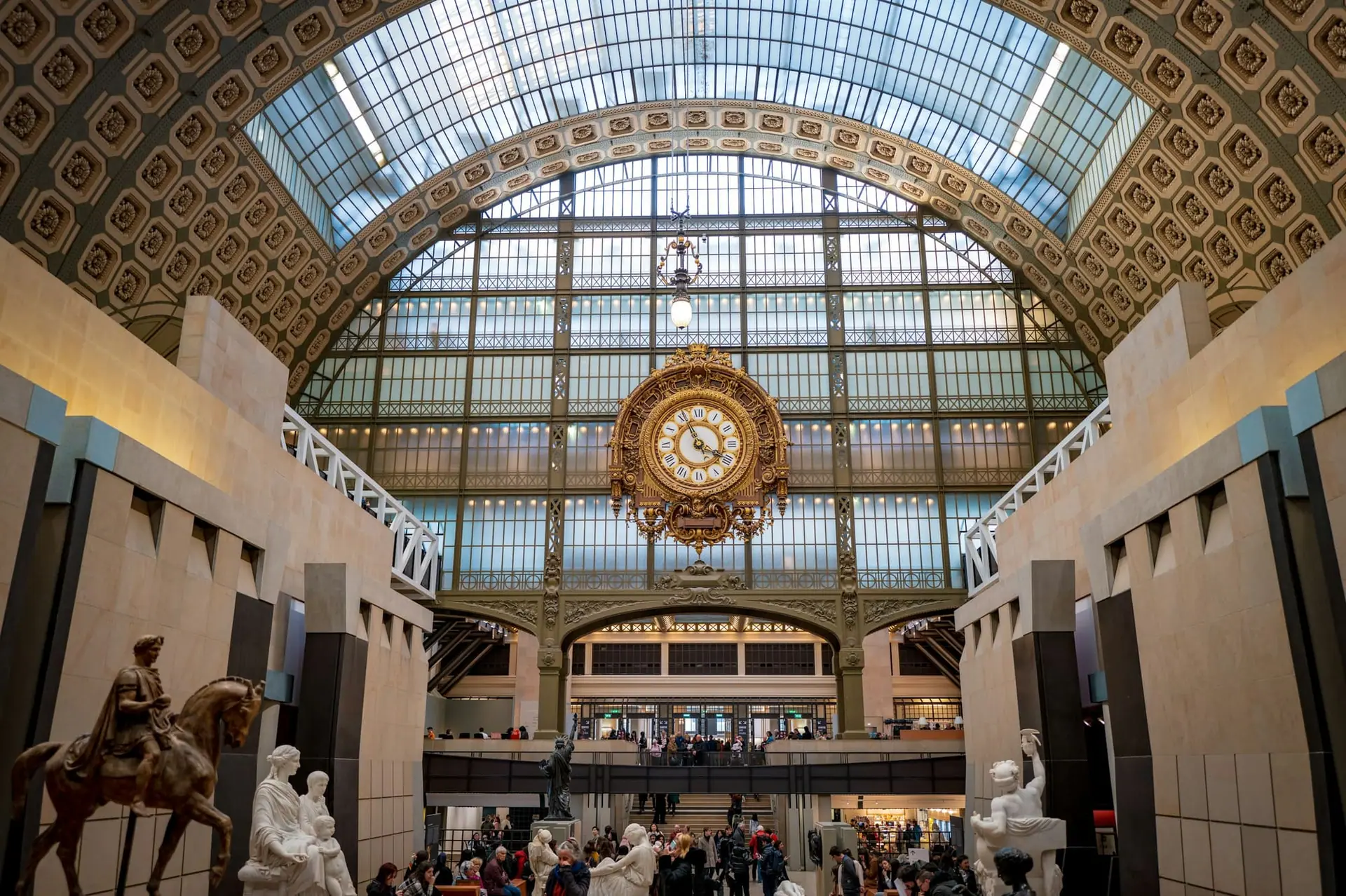
The station's great clocks are the museum's most photographed spot. On the top floor you can stand behind a transparent clock face and look across the Seine to the Tuileries, the Louvre and, on a clear day, the Sacré-Cœur on the hill of Montmartre. Another clock hides the museum café, and the gilded clock above the nave still keeps time over the old platforms.
When to visit and how to avoid the crowds
- The museum is closed on Mondays, so Tuesdays, when the Louvre is closed, are among its busiest days.
- Thursday evening is the best-kept secret: the museum stays open late and the galleries empty out after dinner time.
- Arrive at opening time on other days, and avoid weekends and rainy afternoons, when everyone heads for a museum.
Tickets and practical information
Book a timed ticket in advance on the official website of the Musée d'Orsay: it saves you the ticket queue, although every visitor still goes through a security check. Visitors under 18, and residents of the European Union under 26, get in free. A combined ticket also covers the Musée de l'Orangerie, home to Monet's Water Lilies, across the river.
Allow two to three hours to see the highlights. Opening hours and prices change during the year: check the museum's website before you go.
Louvre or Orsay?
If you only have time for one museum, choose by period. The Louvre covers everything from antiquity to the mid-19th century, from the Mona Lisa to the Winged Victory; the Musée d'Orsay picks up the story where the Louvre leaves off, and it is smaller and easier to enjoy in a few hours. Read our guide to visiting the Louvre to compare.
How to get to the Musée d'Orsay
- RER C: the Musée d'Orsay station is right next to the museum.
- Metro line 12: Solférino station is about five minutes' walk away.
- On foot from the Louvre: cross the Seine by the Léopold-Sédar-Senghor footbridge, about fifteen minutes from the Louvre Pyramid.
What to see nearby
Cross the Léopold-Sédar-Senghor footbridge to the Tuileries Garden and the Orangerie, or wander into Saint-Germain-des-Prés for a café on the Left Bank. The Rodin Museum and Les Invalides are a short walk away. To fit the Musée d'Orsay into a longer stay, follow our two-day Paris itinerary.
Frequently asked questions
What are the must-see paintings at the Musée d'Orsay?
Manet's Olympia and Le Déjeuner sur l'herbe, Monet's Poppies, Renoir's Bal du moulin de la Galette, Degas's dancers, Van Gogh's Starry Night over the Rhône and self-portrait, Whistler's Mother and Caillebotte's Floor Scrapers.
How long do you need at the Musée d'Orsay?
Two to three hours are enough to see the highlights, starting with the Impressionist galleries on the top floor. Art lovers can easily spend half a day.
What day is the Musée d'Orsay closed?
The Musée d'Orsay is closed on Mondays. Thursday evenings, when the museum stays open late, are the quietest time to visit.
Do you need to book the Musée d'Orsay in advance?
It is strongly recommended. A timed ticket bought on the official website saves you the ticket queue, especially at weekends and during the school holidays.
Is the Musée d'Orsay better than the Louvre?
They are complementary. The Louvre covers antiquity to the mid-19th century; the Musée d'Orsay covers 1848 to 1914 and the Impressionists, in a smaller museum that is easier to see in a few hours.
Explore it in person
Tours for this part of Paris
Small-group and private tours with licensed local guides.
 Max 6 guests
Louvre Museum Mona Lisa & Highlights Guided Tour
Choose your experience: Classic small-group, Premium semi-private (max 5), or Exclusive private tour. This ticket is our Classic option with a…
 Private tour
Paris Musée d'Orsay Private Guided Tour with Admission
Discover one of Paris's most celebrated art museums on a private guided tour of the Musée d’Orsay , with museum admission included. Meet your…

Montmartre & Sacré-Coeur Walking Tour with a Local Guide
Montmartre is the highest hill in Paris — and the one corner of the city that still feels like a village. Your licensed local guide leads you up its…
The Journal
Keep reading
Paris Guides
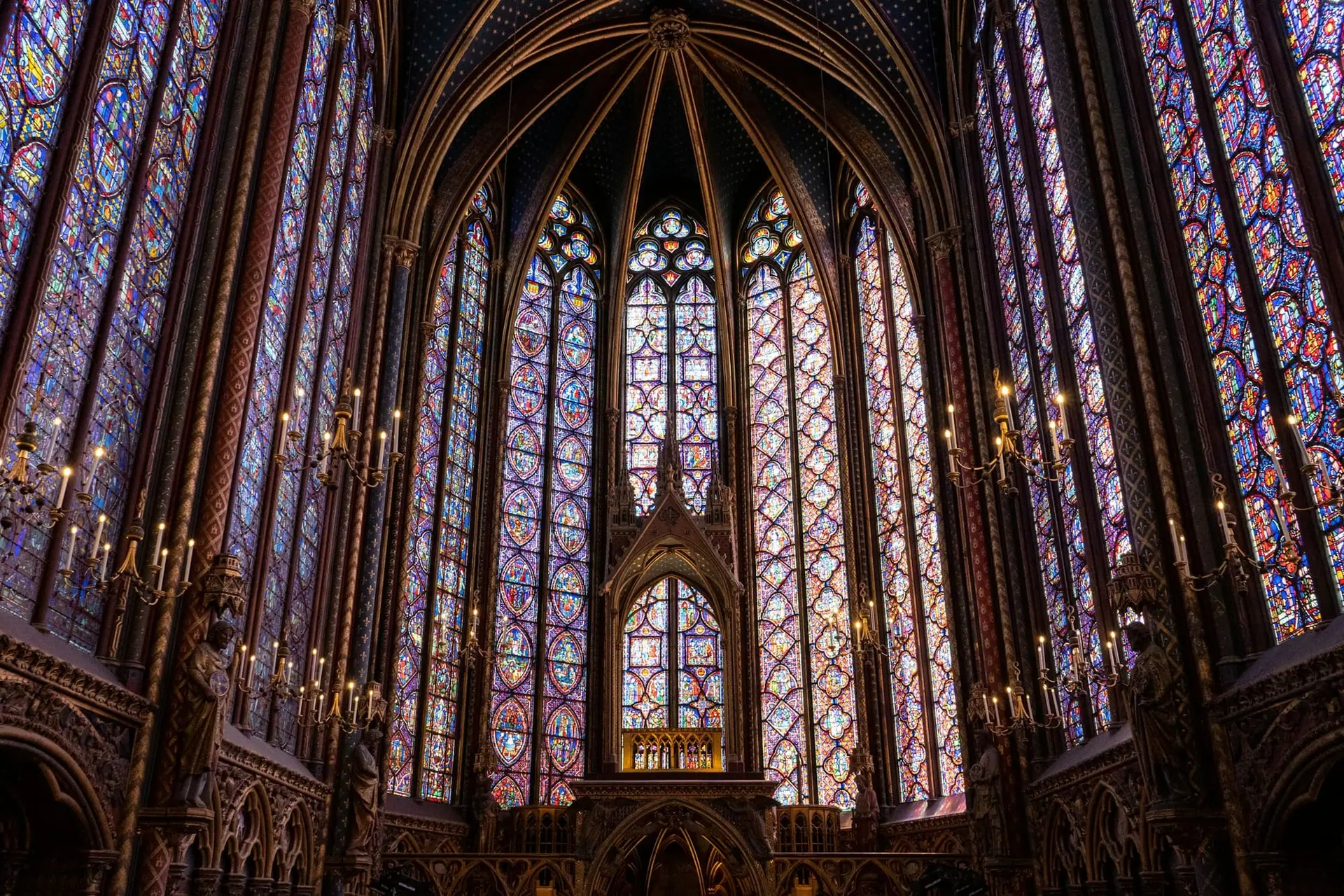
Sainte-Chapelle, Paris: How to Visit the Jewel of Gothic Stained Glass
How to book the Sainte-Chapelle, the best time for the light, how to read its 15 stained-glass windows and what to see nearby on the Île de la Cité.
Paris Guides
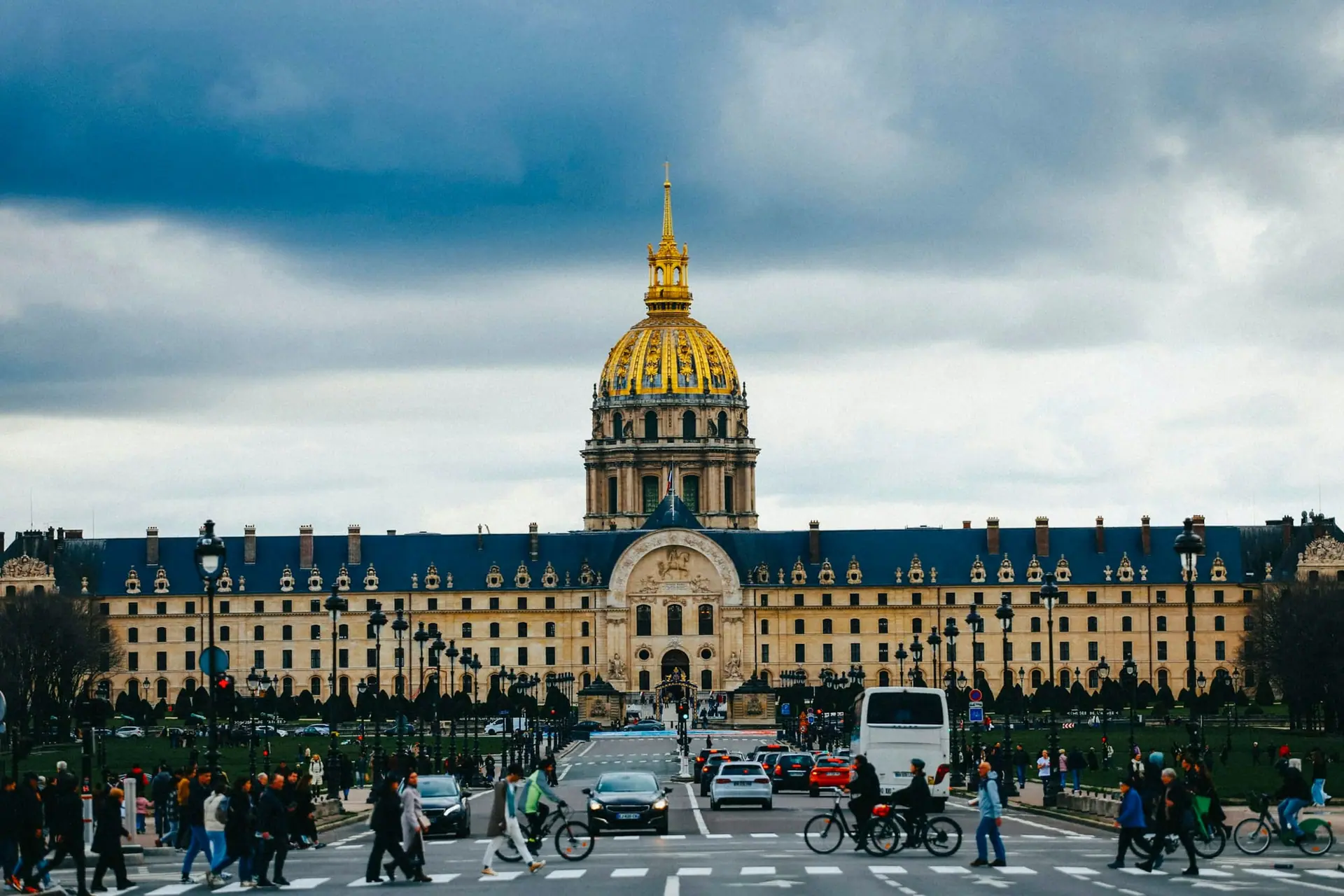
Napoleon's Tomb and Les Invalides: The Complete Visitor's Guide
Napoleon's tomb under the golden dome, the highlights of the Army Museum, how tickets work and how long to allow for a visit to Les Invalides in Paris.
Paris Guides
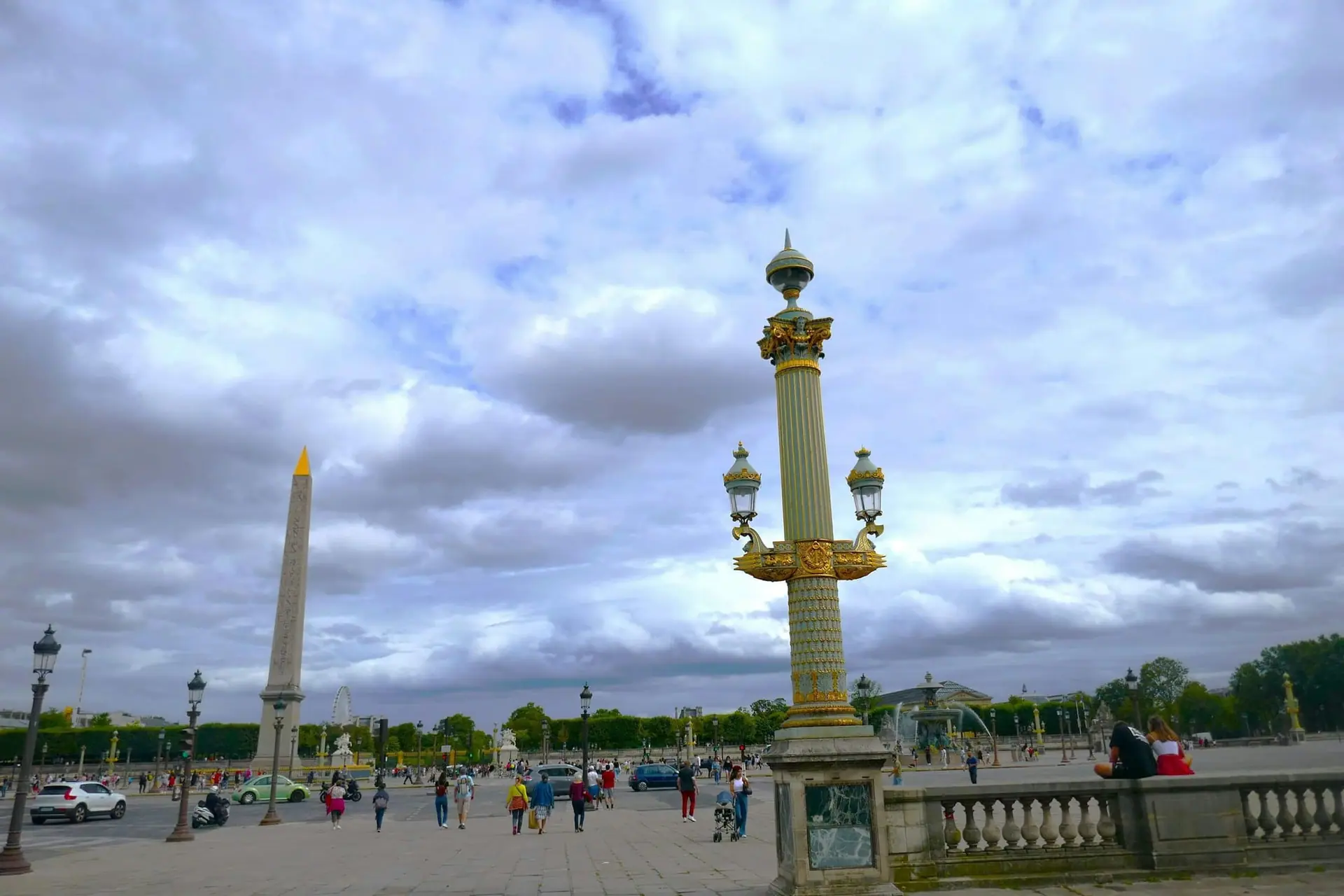
French Revolution Sites in Paris: Where History Happened
From the Bastille to the Place de la Concorde: the places in Paris where the French Revolution happened, what you can still see today and a route to follow them.